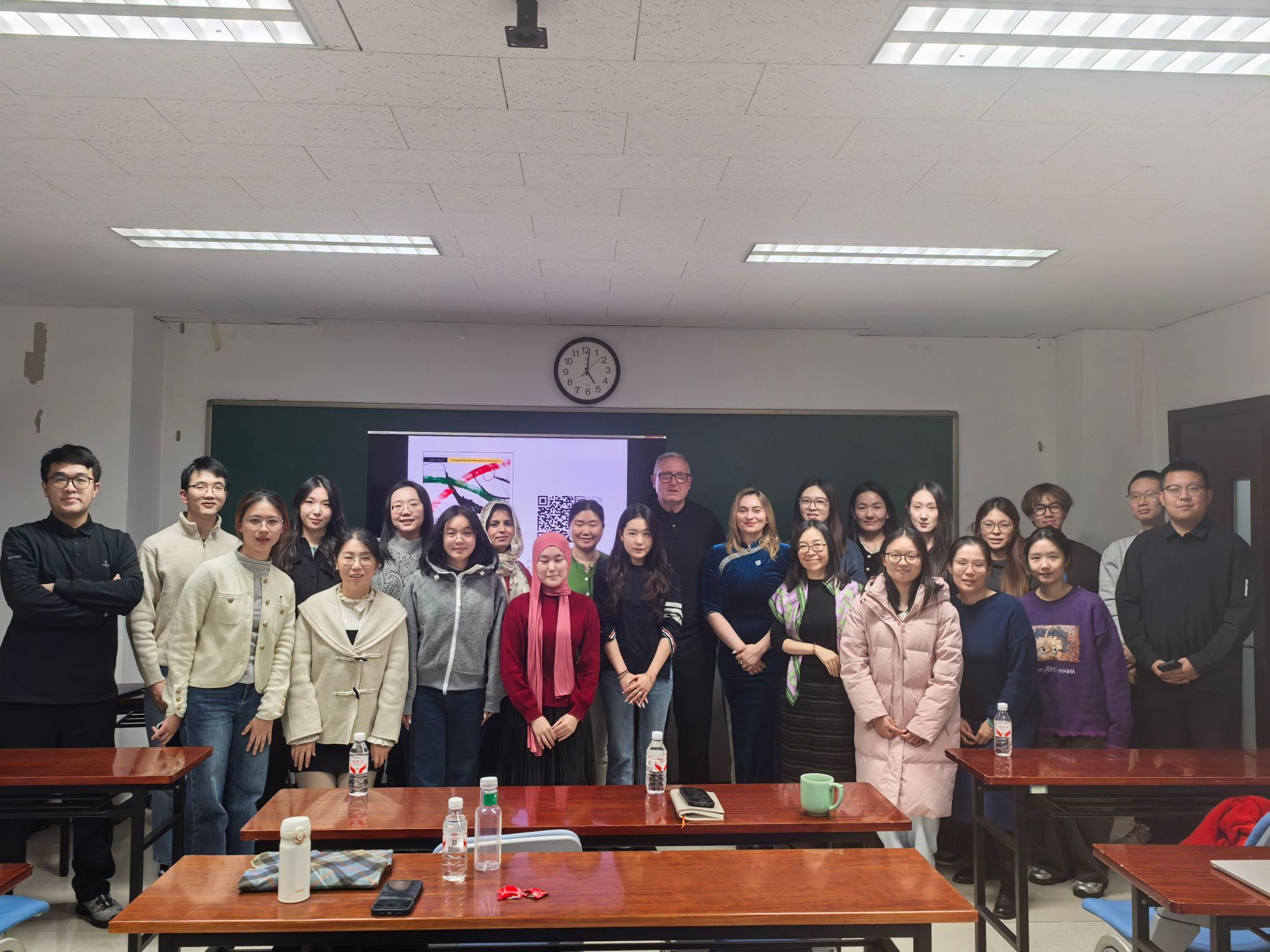
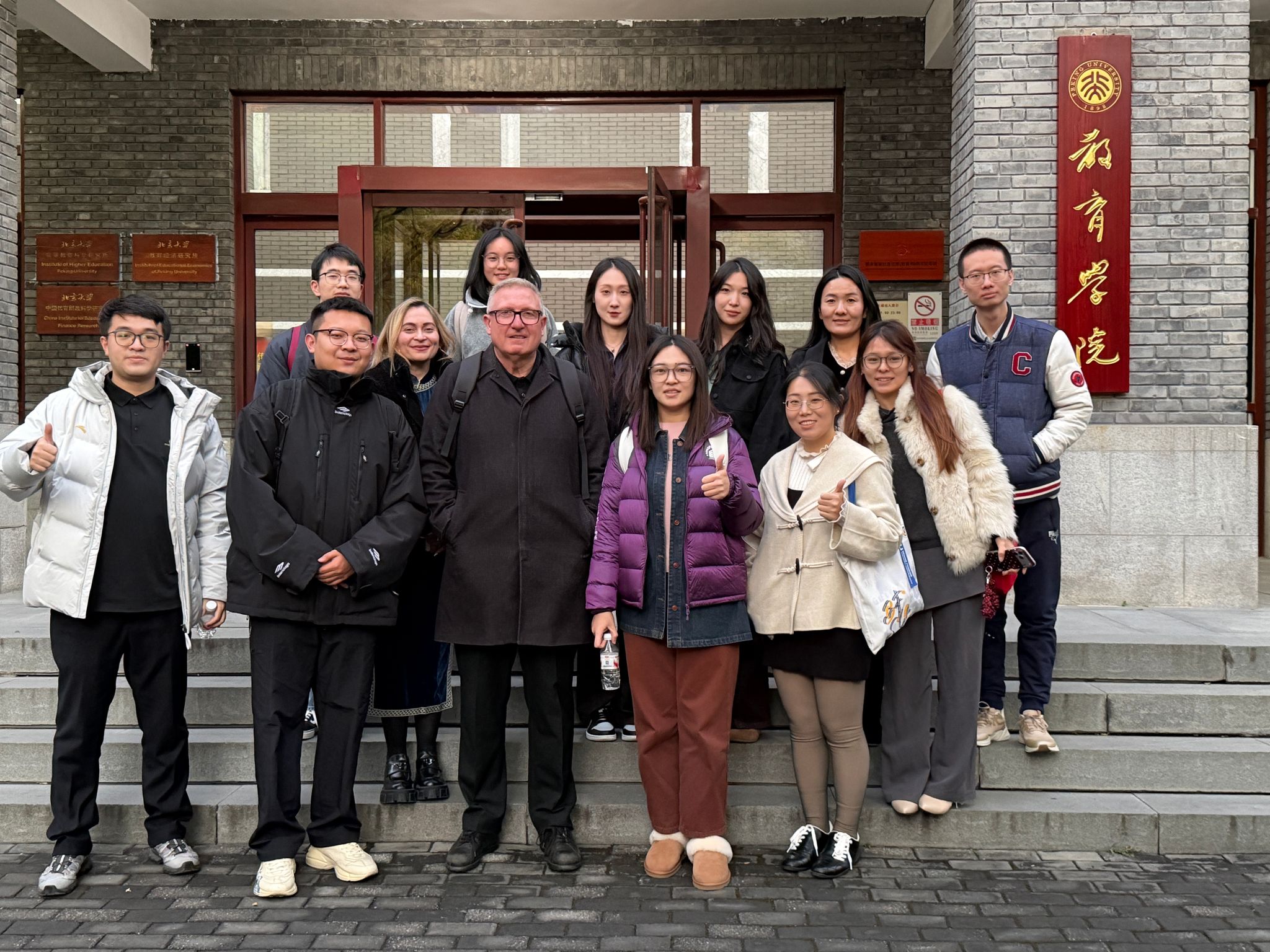
On the afternoon of November 10th, a special session featuring Professor Mario Novelli was held at the Graduate School of Education (GSE), Peking University. Co-hosted by the GSE at Peking University and the GSE at Beijing Foreign Studies University, the event was part of the Learn-In: Education Matters lecture series. Professor Novelli from the School of Education and Social Work at the University of Sussex (UK) delivered the keynote lecture. Centering on the theme of “the rise and fall of the global liberal education order”, he analyzed the historical evolution of the Education for All (EFA) commitment and its internal contradictions with the global development order. Framed by changes in the post-Cold War international landscape, the lecture traced the rise and fall of the liberal order through the lens of the political economy of global education governance. The session was chaired by Assistant Professor Zheng Lei from the GSE at Peking University.
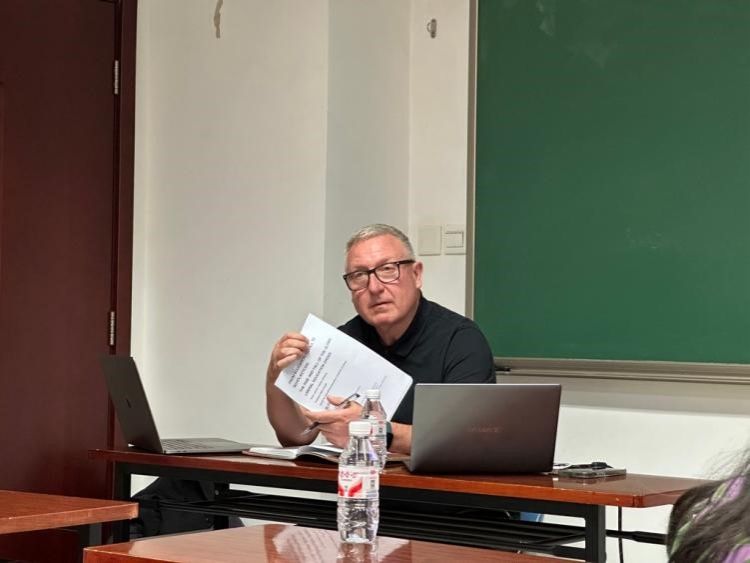
Drawing on his early experience as an international development practitioner, Professor Novelli situated the EFA commitment within the broader trajectory of the post-Cold War liberal order, tracing its historical evolution and internal contradictions with the global development order. He noted that the 1990 Jomtien World Conference on Education for All took place amid post-Cold War optimism. Yet EFA was contradictory from the outset: it promised rights, inclusion and development cooperation, while also carrying forward structural adjustment, neoliberal reform, the commodification of education and the growing influence of global governance actors. EFA goals subsequently came to focus on basic education and gender equality, while progress on many other goals remained limited. He then analyzed how the securitization of education aid after 9/11, fiscal austerity after the 2008 financial crisis and the rise of authoritarian populism reshaped educational resources and priorities, using specific cases to illustrate the challenges facing education systems in conflict settings.
At the theoretical level, Professor Novelli invoked Antonio Gramsci’s phrase “the old is dying and the new cannot be born; in this interregnum a great variety of morbid symptoms appear” to describe the current crisis. He outlined three possible futures: authoritarian nationalism, liberal restoration, and transformative pluralism. He called on educational researchers to attend to global development issues and to take on the responsibility for action.
In the discussion session, faculty and students engaged with issues including the securitization of education aid, knowledge and power in transnational university partnerships, the value neutrality of comparative research, and educational cooperation in the Global South. The discussion was lively.
After the lecture, participants posed for a group photo. The GSE at Beijing Foreign Studies University Learn-In series will continue to invite scholars from China and abroad to promote dialogue between educational research and issues of global transformation and social justice.